
What Is the Best Sleeping or Massage Position for Prenatal Massage?
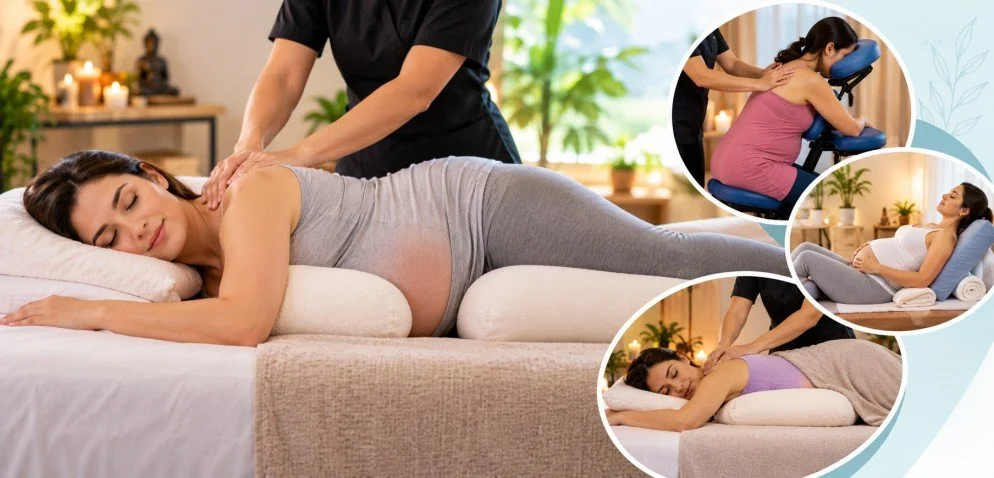
Pregnancy brings many changes to the body, from a growing belly to aching hips, tight shoulders, and restless nights. Finding a comfortable position to relax or sleep can become surprisingly challenging as pregnancy progresses. The right positioning during a massage can make a meaningful difference, helping expectant mothers feel supported while easing everyday tension. Understanding which positions work best, and which ones to avoid, can help make prenatal massage a more comfortable and reassuring experience.
What Is the Best Position for a Prenatal Massage?
The side-lying position is generally one of the most comfortable and practical options for prenatal massage, particularly during the second and third trimesters. In this position, the expectant mother lies on her side with pillows supporting her head, abdomen, back, and legs. This arrangement accommodates the growing belly without placing unnecessary pressure on it.
A trained massage therapist may also place a pillow between the knees to help keep the hips aligned and reduce strain on the lower back. Another pillow can support the upper arm, while a small cushion beneath the abdomen may provide additional comfort. The exact arrangement depends on the mother's stage of pregnancy, body shape, and individual needs.
For anyone considering prenatal massage in Vancouver, it is worth asking the therapist about pregnancy-specific positioning before the session begins. A properly arranged massage table and suitable cushions can help the mother settle into a relaxed position without feeling restricted.
Why Side-Lying Is Often Preferred
As pregnancy progresses, lying flat on the back for extended periods can cause discomfort and, in some cases, compress major blood vessels. This may reduce blood flow and cause dizziness, nausea, or light-headedness. Side-lying positioning helps avoid prolonged pressure on these vessels while allowing the therapist to work on the back, shoulders, hips, and legs.
Some therapists use a semi-reclined position, particularly when lying fully on the side feels uncomfortable. This involves raising the upper body with supportive cushions while keeping the abdomen free from pressure. The therapist can adjust the angle according to the client's comfort and stage of pregnancy.
Face-down positioning is generally unsuitable once the abdomen has grown, unless a specialised pregnancy massage table or approved support system accommodates the belly without pressure. Even with specialised equipment, the therapist should assess whether the position is appropriate for the individual.
Comfort should always guide the session. If a position causes pulling, pressure, breathlessness, dizziness, or discomfort, the mother should tell the therapist immediately so adjustments can be made.
What Is the Best Sleeping Position During Pregnancy?
Sleeping positions and massage positions share some similarities, but they serve slightly different purposes. For sleep, side-lying is generally recommended as pregnancy advances. From 28 weeks onwards, the NHS advises going to sleep on either side rather than on the back. This applies to both nighttime sleep and returning to sleep after waking during the night.
The left side is often discussed because it may support circulation, but the right side is also considered suitable. There is no need to remain rigidly on the left if switching sides helps you sleep more comfortably.
A few simple adjustments can make side-sleeping easier:
Place a pillow between your knees: This can reduce pressure on the hips and help keep the pelvis in a comfortable position.
Support your abdomen: A small pregnancy pillow or folded cushion beneath the belly may reduce pulling sensations.
Support your back: A pillow behind the back can provide extra stability when resting on your side.
Choose a comfortable head pillow: Keep your neck aligned with your spine to avoid additional shoulder tension.
Change sides when needed: Alternating sides may help relieve pressure and make it easier to settle.
These adjustments may also help you feel more comfortable before and after a massage. However, a sleeping position that feels right at home may need additional support on a massage table.
For people seeking prenatal massage in Vancouver, discussing sleeping difficulties, hip discomfort, and lower-back tension with a qualified therapist can help them choose a suitable position during treatment. Massage may help relieve some muscular discomfort, although it cannot replace medical assessment for persistent pain or sleep problems.
When Should You Avoid Certain Positions?
During pregnancy, prolonged flat-on-the-back positioning should generally be avoided, especially later in pregnancy. Lying directly on the stomach is also unsuitable when the abdomen cannot be comfortably accommodated. A therapist should never ask a client to tolerate a position that causes pain, pressure, or difficulty breathing.
Pregnancy massage should be adapted to the individual's health and stage of pregnancy. Before booking, discuss any pregnancy complications, high blood pressure, a history of blood clots, unusual swelling, or other medical concerns with your healthcare provider. Seek medical advice before massage if you have a high-risk pregnancy or have been advised to avoid particular treatments.
Massage should not be used to manage warning signs such as vaginal bleeding, fluid leakage, severe abdominal pain, chest pain, sudden shortness of breath, or a severe headache. These symptoms require prompt medical assessment.
A qualified prenatal massage therapist can explain the available positioning options, use appropriate pressure, and modify the session as needed. Clear communication is essential: let the therapist know if you feel uncomfortable, need another pillow, or would prefer to change sides.
Frequently Asked Questions
1. Is side-lying the safest position for prenatal massage?
Side-lying is commonly preferred because it accommodates the growing abdomen and helps avoid prolonged pressure on major blood vessels. The most suitable position depends on the individual's pregnancy and comfort.
2. Can I lie on my back during a pregnancy massage?
Brief, appropriately supported semi-reclined positioning may be suitable for some clients. Prolonged flat-on-the-back positioning should generally be avoided as pregnancy advances. Follow your therapist's guidance and your healthcare provider's advice.
3. Is it better to sleep on the left or right side during pregnancy?
Both sides are generally suitable. From 28 weeks, it is recommended to go to sleep on either side rather than on the back. Choose the side that feels most comfortable.
4. When can I start prenatal massage?
Timing depends on your pregnancy, medical history, and your healthcare provider's advice. Discuss any concerns with your provider and choose a therapist trained in prenatal massage.
5. Can prenatal massage help with back and hip discomfort?
It may help relieve muscle tension and some common pregnancy-related aches. However, results vary, and persistent or severe pain should be assessed by a healthcare professional.
Book a Prenatal Massage at New Moon Massage and Wellness
Looking for a more comfortable way to manage pregnancy-related muscle tension? New Moon Massage and Wellness can help you explore suitable massage options tailored to your comfort and needs. If you are considering prenatal massage in Vancouver, contact the team to discuss your stage of pregnancy, positioning preferences, and any questions before booking your session.